More Than a Piece of Paper: Restoring Identity and Hope for a Displaced Family
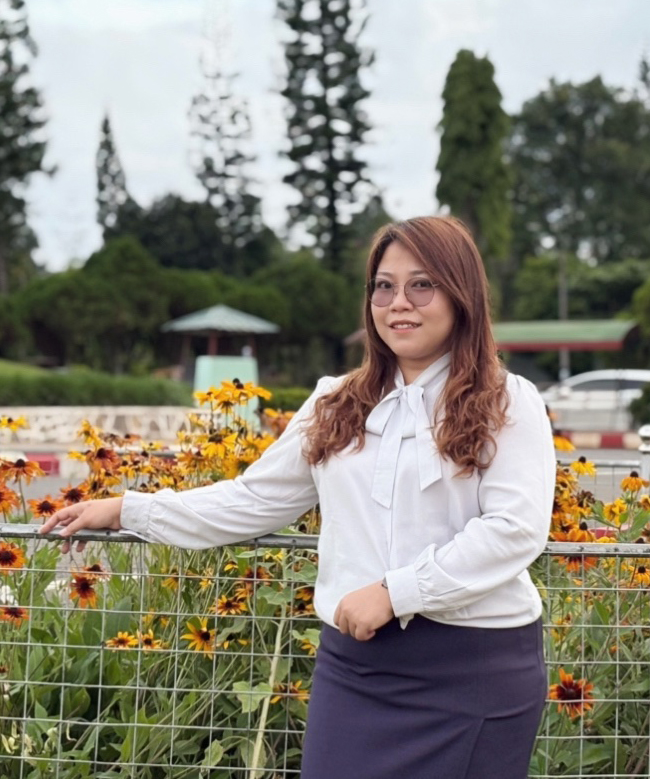
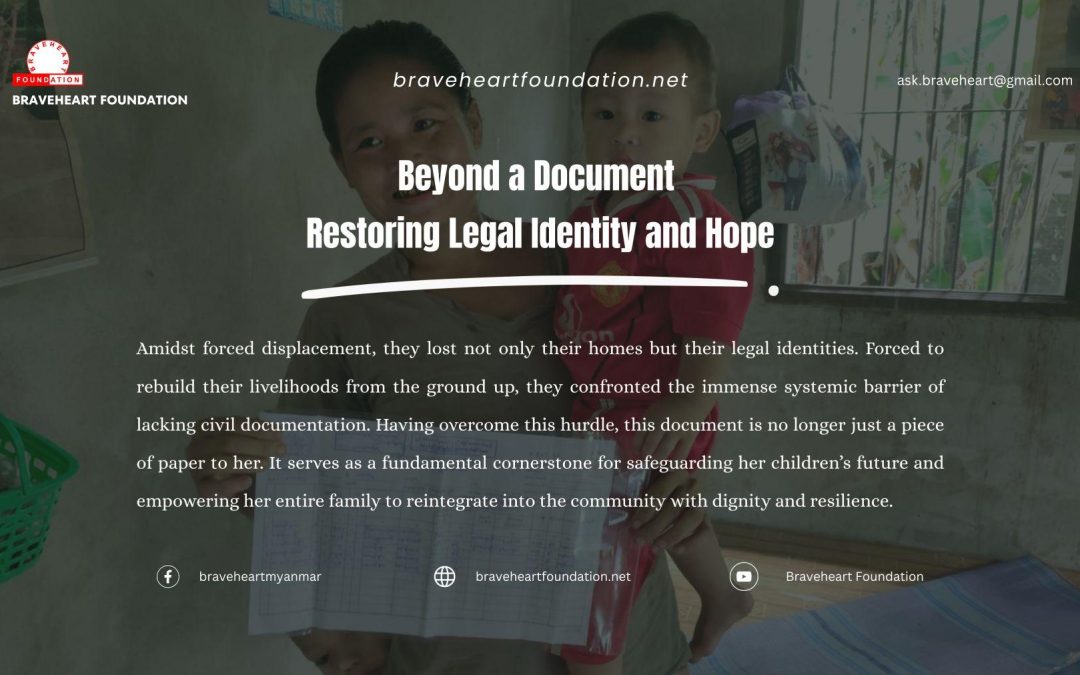
For Naw Say Phaw, a 30-year-old Christian Karen woman, the lack of civil documentation emerged as the greatest barrier to rebuilding her family’s life.
Displaced from Kayah Prone Chaung village in Kyauk Taing, Taungoo Township, she now seeks refuge with her three children in Seit Hpu Taung village. Having separated from her parents’ household registration and displaced far from her origin, her family lacked valid legal identities. This absence of documentation severely restricted their daily lives—creating barriers to birth registration for her children, limiting her husband’s right to work and freedom of movement, and hindering their access to vital humanitarian assistance.
Braveheart Foundation’s staff and volunteers identified Naw Say Phaw’s vulnerabilities during a community protection outreach campaign. Listening closely to her challenges, the team provided targeted case management. They assessed her existing papers, identified critical gaps, and provided free, practical legal counseling on navigating the complex application processes at relevant government departments.
Overcoming these bureaucratic hurdles was a significant challenge. Naw Say Phaw had to travel nearly six miles back to her previous address, present proof of ownership, and attend multiple administrative appointments. Throughout this strenuous process, the Braveheart Foundation stood by her, providing consistent guidance and support.
After patiently navigating the requirements, Naw Say Phaw finally secured the civil documentation her family so desperately needed.
“I feel like a missing piece has finally been filled,” she said.
These documents represent far more than administrative paperwork. They serve as a gateway to fundamental rights—enabling birth registration, unlocking better livelihood opportunities, facilitating access to humanitarian aid, and restoring a sense of security.
Empowered by her successful experience, Naw Say Phaw now acts as an informal advocate, sharing her knowledge with other displaced families facing similar documentation barriers.
“There are still so many families like mine facing the same difficulties,” she shared. “I try to explain what I know. But I’m sad that this project may end. I hope it can continue. Services like this are still very much needed here.”
Naw Say Phaw’s story underscores that civil documentation is never merely an administrative procedure. For displaced populations, it is the fundamental cornerstone that ensures social inclusion, enables access to essential services, and empowers them to rebuild their livelihoods with dignity and resilience.